
How to Buy in Bulk from Alibaba in Pakistan — Complete Guide
This page may contain affiliate links. SmartPicksup may earn a small commission at no extra cost to you. Full disclosure →
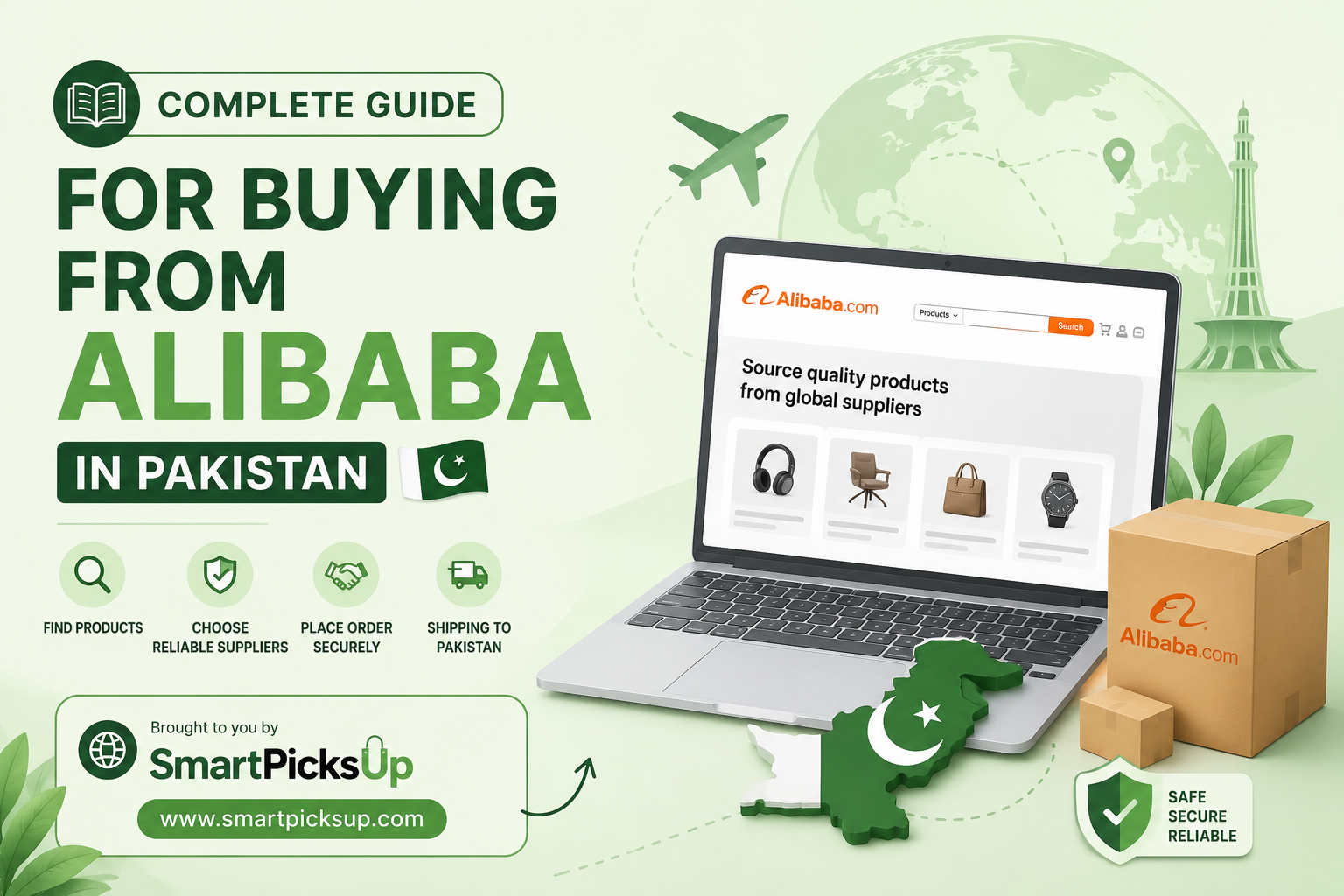
Importing products in bulk from Alibaba has become one of the most profitable business opportunities for Pakistani entrepreneurs. With access to Chinese factory prices, you can source products at 30–70% below local wholesale rates. But Alibaba is very different from AliExpress — and getting the process right matters. This complete guide walks you through everything you need to know.
Alibaba vs AliExpress — What’s the Difference?
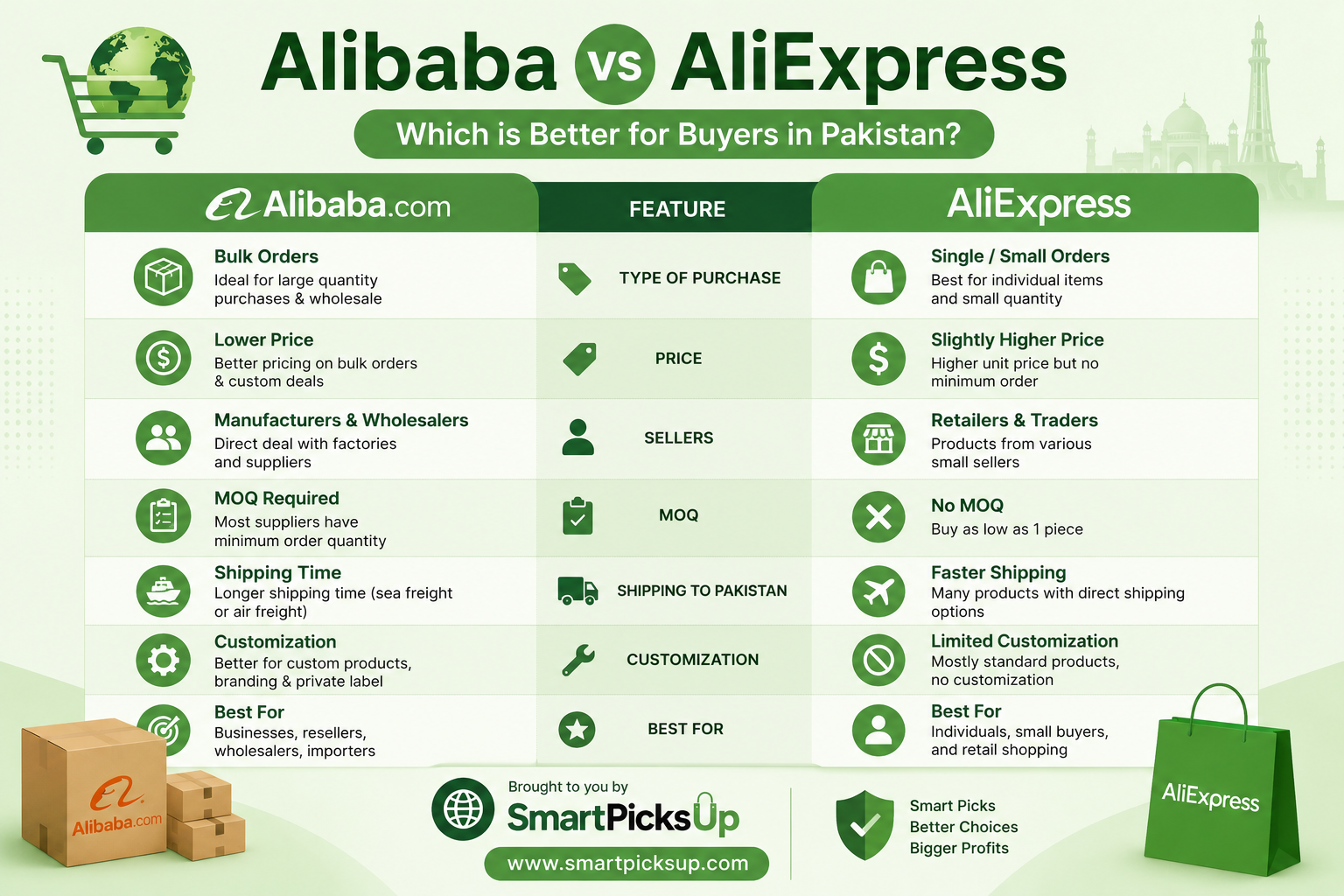
Most Pakistani buyers know AliExpress because they have bought a single item from there. Alibaba looks similar at first glance, but it is a completely different platform with a different purpose. Understanding this difference will save you time and money.
Alibaba — B2B Wholesale Marketplace
Alibaba connects businesses with manufacturers. You communicate directly with factories in China, negotiate prices, request samples, customise products with your branding, and order in bulk. Minimum Order Quantity (MOQ) typically ranges from 50 to 1,000 units depending on the product. Payment methods are commercial — Letter of Credit (L/C), Telegraphic Transfer (T/T), or Alibaba’s secure Trade Assurance service.
AliExpress — B2C Retail Marketplace
AliExpress is owned by the same company (Alibaba Group) but operates as a retail marketplace for individual consumers. You can buy a single piece of any product, payment is via card, prices are fixed, and shipping is via international postal service. The prices are higher than Alibaba but still much cheaper than buying locally in Pakistan.
When Should You Choose Each Platform?
| Your Situation | Recommended Platform |
|---|---|
| Personal use — 1 to 5 items | AliExpress |
| Testing a product for resale (5–20 units) | AliExpress (sample order) |
| Starting a small business (50–500 units) | Alibaba |
| Reselling on Daraz/Facebook (100+ units) | Alibaba |
| Custom branded products (OEM) | Alibaba only |
| Container loads (1,000+ units) | Alibaba |
Best Products to Import from Alibaba into Pakistan
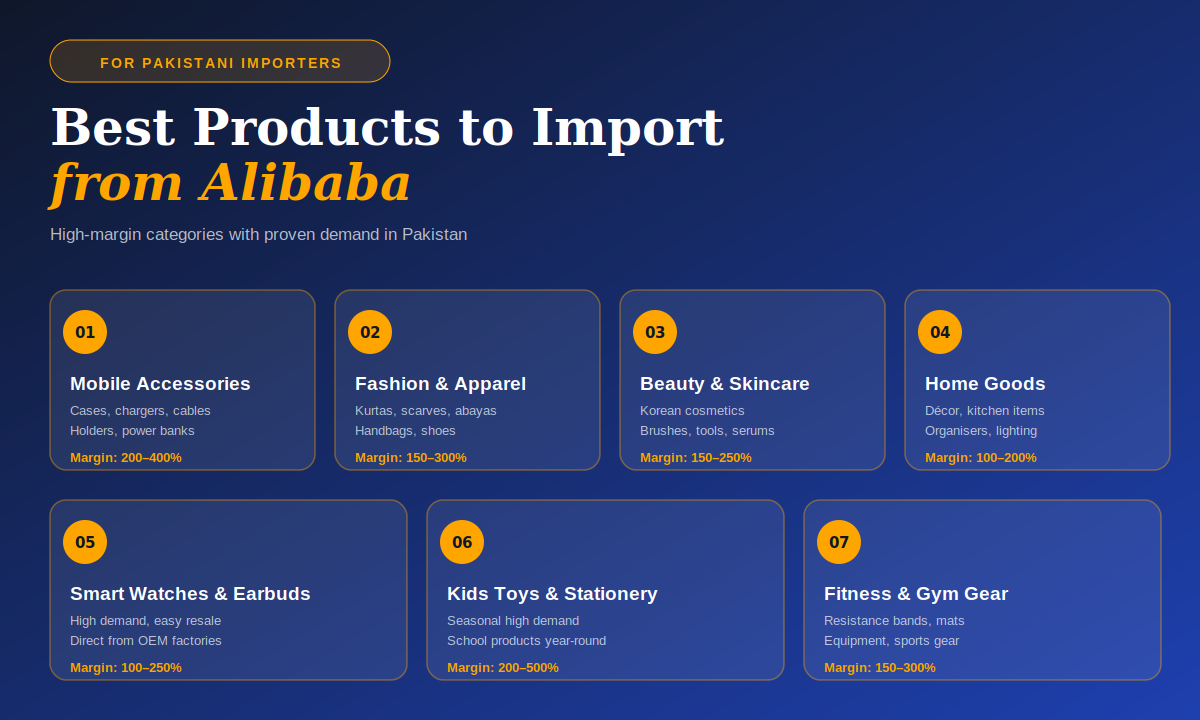
Not every product is profitable to import. The right products combine high local demand, reasonable shipping weight, no PTA or government restrictions, and strong profit margins after all costs. Here are the seven proven categories that work well for Pakistani importers.
1. Mobile Phone Accessories
The highest volume and most consistent category in Pakistan. Phone cases, chargers, USB cables, screen protectors, power banks, ring lights, and selfie sticks all have strong demand. MOQs are typically 100–500 units, unit cost is very low (Rs. 50–300), and resale margins reach 200–400%. These items are lightweight, ship cheaply, and have no import restrictions.
2. Fashion & Apparel
Women’s clothing — kurtas, scarves, abayas, handbags — performs exceptionally well from Alibaba. Many sellers offer custom designs and OEM branding so you can build your own clothing brand. Watch for seasonal demand: Eid, wedding season (October–February), and back-to-school periods all drive sales spikes.
3. Beauty & Skincare Products
Korean cosmetics, makeup brushes, beauty tools, and skincare devices have growing demand in Pakistan. Important: cosmetics with active ingredients (whitening creams, prescription-like products) face strict customs scrutiny. Stick to clearly labelled tools and accessories for your first orders. Margins typically run 150–250%.
4. Home Goods & Organisers
Storage boxes, drawer organisers, kitchen gadgets, LED lights, and decorative items work consistently. These products tend to be bulkier so shipping cost per unit is higher — calculate sea freight carefully. Lower margins than electronics (100–200%) but reliable year-round demand.
5. Smart Watches & Wireless Earbuds
High-demand category with strong resale potential on Daraz and Facebook Marketplace. Source from established OEM factories — many of these factories also make products for known brands. Avoid clones of trademarked brands (counterfeit Apple AirPods, fake Samsung watches) as these will be confiscated by Pakistani customs and your account may face penalties.
6. Kids Toys & Stationery
Strong seasonal performance — back-to-school in August–September, Eid, and December–January gift season. Stationery (notebooks, pens, character school bags) provides consistent year-round sales. Toy margins can reach 200–500% but check Pakistani safety standards before importing children’s products.
7. Fitness & Gym Gear
Resistance bands, yoga mats, dumbbells, gym equipment, and sportswear are growing rapidly in Pakistan. The post-COVID home fitness trend continues. Avoid very heavy items (treadmills, large weights) until you have established shipping arrangements — they make sea freight expensive.
Avoid These Categories
Some products look profitable but cause serious problems for Pakistani importers:
- Smartphones — PTA approval is required and registration fees are very high. Not worth importing as a business.
- Branded fakes — Counterfeit Nike, Adidas, Apple, Samsung products are confiscated by customs.
- Pharmaceuticals & supplements — Require DRAP registration. Strictly regulated.
- Food items — PSQCA approval required. Long bureaucratic process.
- Heavy electronics — High shipping costs eat into margins. Customs duty is also higher.
Step-by-Step: How to Buy from Alibaba in Pakistan
Step 1 — Create an Alibaba Account
Sign up for free at alibaba.com. Create a buyer account with your real business name (or your personal name if starting out). Add a profile photo and complete your business information — this signals to suppliers that you are a serious buyer.
Step 2 — Search for Products
Use specific search terms with product specifications (e.g. “wireless earbuds bluetooth 5.0 OEM” rather than just “earbuds”). Apply these filters: Trade Assurance, Verified Supplier, and minimum 4-year transaction history. Sort by “Best Match” for quality-balanced results.
Step 3 — Verify Suppliers
Always verify before sending money. Check for: Gold Supplier badge (verified by Alibaba), Trade Assurance participation, transaction history (10+ deals minimum), and response time (under 12 hours indicates a serious supplier). Read all reviews. Request a video call to see the actual factory — legitimate suppliers will agree to this.
Step 4 — Request Quotation & Sample
Send a Request for Quotation (RFQ) to 3–5 suppliers for the same product. Include: target quantity, target price, packaging requirements, shipping destination (Karachi or Lahore). Compare quotes and always order a sample (typically $50–200 with shipping) before placing a bulk order. Never skip the sample.
Step 5 — Negotiate & Place Order
Negotiation is expected on Alibaba — listed prices are starting points. Typical 10–20% reduction is achievable on bulk orders. Always pay through Alibaba Trade Assurance — never via Western Union, bank transfer, or any payment method outside Alibaba’s platform. Trade Assurance protects your payment until you confirm receipt.
Step 6 — Shipping to Pakistan
Choose between three shipping methods:
- Air freight — 5–10 days, $5–8 per kg. Best for small high-value orders.
- Sea freight LCL (Less than Container Load) — 25–40 days, $80–150 per cubic metre. Best for medium orders.
- Sea freight FCL (Full Container Load) — 25–40 days, fixed container cost. Best for large orders.
For most first-time Pakistani importers, sea freight LCL via Karachi Port is the right choice. Hire a customs clearing agent (clearing charges typically Rs. 8,000–20,000 per shipment) to handle paperwork.
Step 7 — Pakistan Customs & Clearance
All commercial imports require: an NTN (National Tax Number), WeBOC ID for digital customs filing, and Importer Registration with Pakistan Customs. Customs duty varies by product category (5–35%), plus 18% sales tax and 5.5% advance tax. Budget approximately 25–45% of product cost for total customs charges. Your clearing agent calculates this exactly based on your HS Code.
Sample Cost Calculation
Here’s a real-world example of importing 200 mobile phone cases from Alibaba:
Sea freight (LCL, 0.1 CBM): $25
Pakistan customs duty + taxes (~28%): $74
Clearing agent: Rs. 12,000 (~$43)
Local transport to your city: Rs. 5,000 (~$18)
Total landed cost: ~$400 = Rs. 112,000
Cost per case: Rs. 560
Local Daraz selling price: Rs. 1,500–2,000
Profit per case: Rs. 940–1,440
Total profit on 200 units: Rs. 188,000–288,000
Common Mistakes to Avoid
- Paying outside Alibaba — Always use Trade Assurance. Direct bank transfers have no protection.
- Skipping samples — Always order a sample first. A $100 sample can save you from a $5,000 bad order.
- Ignoring MOQ negotiations — Many suppliers will lower MOQs by 30–50% if asked politely.
- Underestimating customs — Calculate total landed cost before ordering, not after.
- Choosing the cheapest supplier — Quality issues, late shipments, and disputes cost more than the price difference.
- Importing without NTN/WeBOC — Customs clearance will be impossible.
Our Verdict
Alibaba is the right platform for Pakistani entrepreneurs serious about building a business. Start small — pick one product category, order samples, learn the customs process with a small first shipment, then scale up. Pakistani buyers who follow the process properly typically achieve 200–400% margins on their first profitable products. Avoid shortcuts: use Trade Assurance, order samples, calculate full landed costs, and respect customs requirements.
FAQs
Is buying from Alibaba safe?
Yes — when you use Trade Assurance and verified Gold Suppliers. Trade Assurance holds your payment in escrow until you confirm receipt of goods that match the agreed specifications. Never pay outside the Alibaba platform.
What is the minimum I can spend to start?
A realistic minimum is around $300–500 for a first test shipment via air freight, including product cost, shipping and customs. For sea freight orders, $800–1,500 makes more sense due to fixed clearing costs.
Do I need a company registration to import?
For commercial imports, yes — you need an NTN, WeBOC ID and importer registration. For small personal samples under $200, you can import as an individual with reduced documentation requirements.
How long does shipping from China to Pakistan take?
Air freight: 5–10 days. Sea freight LCL to Karachi: 25–40 days. Add 3–7 days for customs clearance and inland transport to your city.
Related guides: Amazon vs Daraz vs AliExpress for Pakistan | How to Buy from Amazon in Pakistan | Compare Prices Tool